

In personal injury settlements, the focus often centers on immediate medical expenses, lost income, and pain and suffering. However, there is one important element that can be underrepresented-accurately projecting future medical care costs. Addressing this factor ensures that long-term needs are fully considered in the settlement process.
Industry analysis reveals a concerning pattern. While insurance companies employ teams of actuaries to calculate long-term medical expenses, many personal injury settlements don’t adequately cover clients’ actual future needs. The result? Clients who believed they were financially protected may face unexpected medical expenses years after their case closed.
The Hidden Reality of Settlement Negotiations
Insurance adjusters understand the true cost of injuries over time. They know that joint replacements may require revision surgeries, that spinal injuries often worsen with age, and that treatment costs typically increase over decades. Most importantly, they recognize that many attorneys lack access to the same level of medical cost analysis.

This knowledge gap creates an uneven playing field where insurance companies can offer settlements that appear reasonable today but may prove insufficient over time. The adjuster’s goal is to resolve the claim for the lowest possible amount while staying within acceptable risk parameters.
The Most Commonly Undervalued Future Costs
1. The Surgery Revision Cycle
One frequently overlooked aspect involves the lifecycle of surgical interventions. When a client needs a joint replacement, the immediate surgery cost is clear. What’s often missed is the pattern of future revisions.
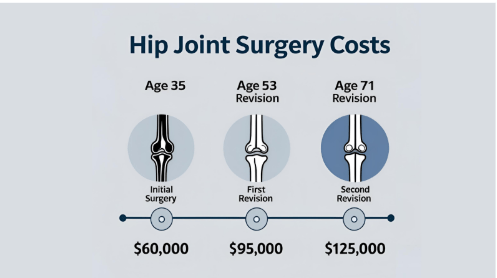
Modern joint replacements typically last 15-20 years, though this can vary based on the patient’s age, activity level, and the specific type of implant used. For younger clients, this means multiple surgeries throughout their lifetime. Each revision surgery is generally more complex and expensive than the original procedure. When combined with medical inflation, lifetime costs can be substantial.
Example scenario: If an initial hip replacement costs $60,000 today, future revisions will likely cost significantly more due to increased complexity and medical inflation over time.
2. Technology and Equipment Replacement
Medical equipment represents another frequently overlooked category. Unlike other purchases, medical devices can require ongoing replacement and maintenance throughout a patient’s lifetime.
Consider prosthetic limbs, which typically need replacement every 3-5 years, depending on the user’s activity level and the type of prosthetic. Over several decades, total equipment expenses can include:
- Multiple prosthetic replacements
- Ongoing annual adjustments and repairs
- Backup equipment for reliability
- Regular technology upgrades
- Specialized devices for different activities

Wheelchairs, hearing aids, CPAP machines, and other assistive devices follow similar replacement cycles.
3. The Aging Acceleration Effect
Perhaps the most underestimated factor is how injuries interact with natural aging. This phenomenon, sometimes called “accelerated aging” occurs when existing injuries compound the normal effects of aging.
Medical research shows that existing injuries often compound the effects of aging:
- Arthritis may develop faster in previously injured joints
- Spine injuries can accelerate disc degeneration
- Some injuries may contribute to other health complications over time
These progressions can dramatically increase treatment costs as patients age.

Category-Specific Considerations
Motor Vehicle Accidents
Car crashes make up one of the largest categories of personal injury cases. They often cause multiple injuries at once, which can interact and complicate recovery over time.
A cervical spine injury might lead to headaches, shoulder problems from compensation patterns, and other complications. Each condition may require ongoing treatment that could intensify with age.
Whiplash injuries can have long-lasting effects that aren’t immediately apparent. Research shows that a significant percentage of whiplash patients continue to have symptoms years after their accident, with some developing chronic pain syndromes that require ongoing treatment.
Slip and Fall Cases
What appears to be a straightforward fracture might involve joint damage that leads to future complications requiring additional treatment and potentially mobility assistance.
Medical Malpractice Cases
Medical malpractice cases carry additional complexity because the initial injury often results from healthcare that was supposed to help. Surgical errors may require multiple corrective procedures, while medication errors can create lifelong monitoring needs. Diagnostic failures often mean treating conditions at more advanced, expensive stages.
Breaking the Pattern
The solution isn’t to become a medical expert—it’s to work with professionals who specialize in translating medical needs into financial projections. E Wills Legal Nurse Consultants use a comprehensive methodology in projecting future medical costs. Comprehensive future medical cost analysis should account for:
- Equipment replacement cycles
- Surgical revision timelines
- Age-related progression factors
- Regional cost variations
- Medical inflation projections
These projections provide the necessary documentation to support settlement negotiations, accompanied by a thorough analysis.
Taking Action
Whether you represent plaintiffs or defendants, accurate future medical cost analysis serves the interests of justice and sound legal practice. For plaintiff attorneys, comprehensive projections ensure settlements truly reflect the long-term impact of injuries. For defense counsel and insurance professionals, thorough medical cost analysis leads to more defensible settlement decisions and better risk assessment.
When handling personal injury cases, the key questions remain consistent across both sides. Most importantly, are the settlements truly based on complete information, including the potential for lifetime medical costs? Do the negotiations reflect the full scope of future medical needs?
For attorneys on either side seeking to strengthen their approach to future medical cost analysis, we’ve developed The Five Hidden Medical Costs that detail the most significant factors that can impact settlement values. This resource provides specific guidance on identifying and documenting predictable medical expenses that can ensure fair compensation and improve settlement negotiations.
Download “The 5 Hidden Medical Costs That Could Shrink Personal Injury Settlements”
This guide provides a comprehensive analysis with specific examples and financial projections that support informed decision-making in settlement negotiations. Accurate future medical cost analysis ensures all parties have the information needed to make sound legal and financial decisions.

About the Author
Ethel Wills, RN, is the founder of E Wills Legal Nurse Consultants, bringing over 30 years of nursing experience across clinical and healthcare consulting roles. Specializing in medical cost projection services to personal injury and medical malpractice attorneys throughout Alabama, Georgia, Mississippi, Florida, Tennessee, and Texas, Ethel helps legal professionals secure comprehensive settlements that account for their clients’ complete future medical needs.
For more information about comprehensive medical cost projections, visit www.ewillslegalnurse.com.